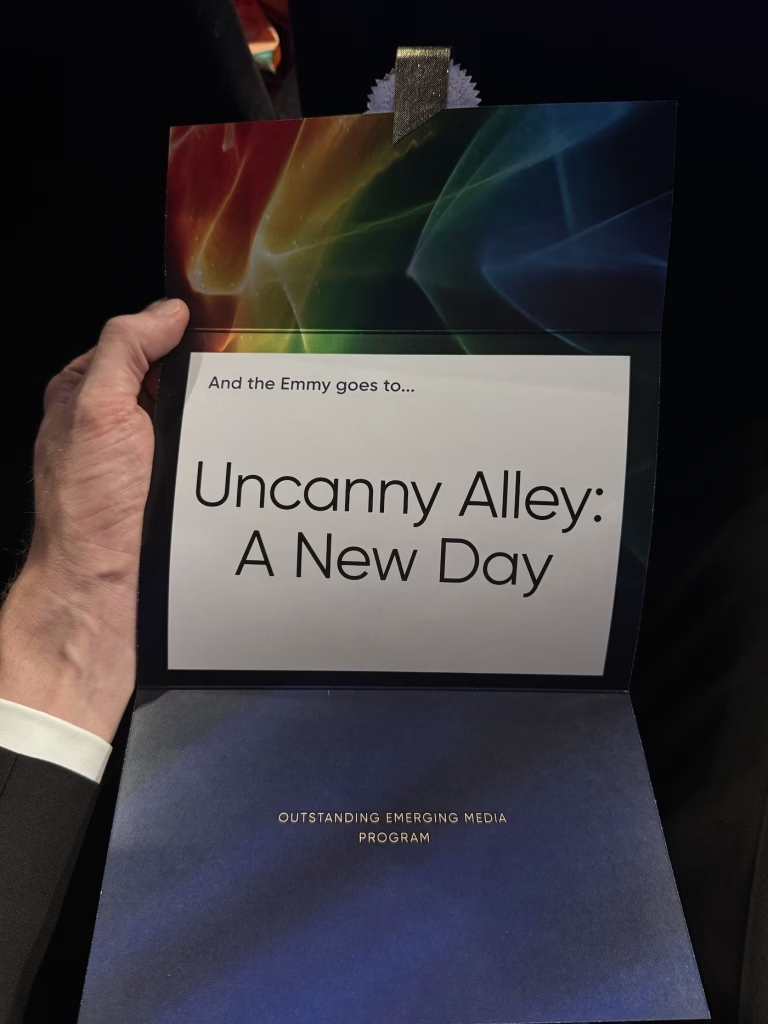
A Kommetjie resident has just won an Emmy for a piece of theatre that doesn’t have a stage, a theatre or even a physical set.
Instead, the audience puts on a VR headset.
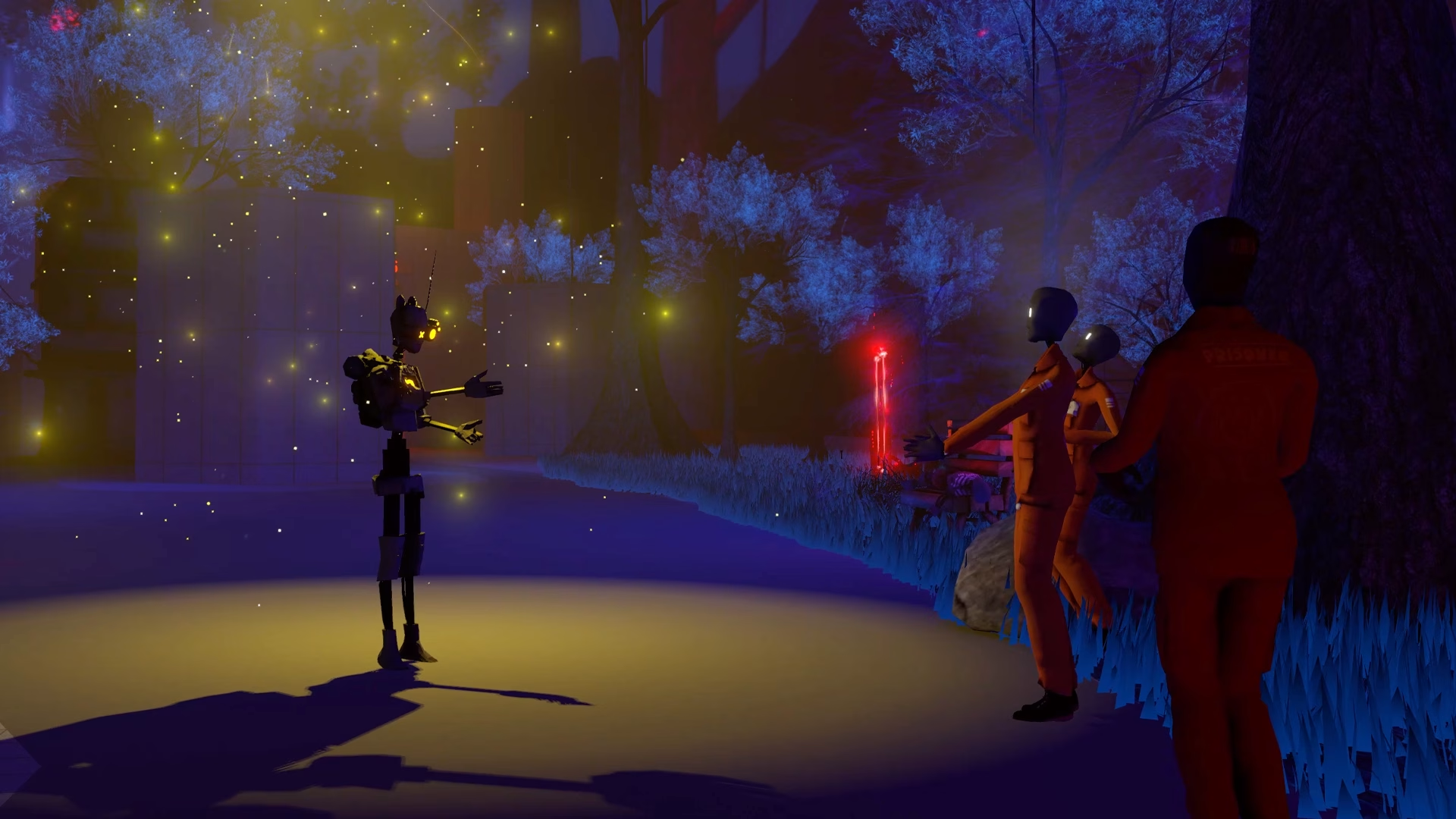
Inside it, they find themselves in Uncanny Alley – a strange, cyberpunk world created by local artist and worldbuilder Rick Treweek, better known in virtual reality as MetaRick. There are actors, characters, a story and a set of choices to make. You can walk around, talk to other people and interact with what is happening around you.
So, what is it exactly?
Unlike a film or a conventional video game, the people performing the story are there with you, in real time.
That’s the part that can be difficult to explain if you’ve never experienced VR. So forget the technology for a moment. Think of it as a live theatre production where, instead of sitting in the audience watching the actors on stage, you step through the curtain and into the world of the play.
In Uncanny Alley: A New Day, up to six audience members enter the virtual world, as their own three-dimensional avatars, together along with two real-life actors. The actors play 15 different characters during the performance, responding to the audience as the story unfolds. Most of the production is scripted, but around 20% is improvised according to what the audience does.
Which means no two performances are quite the same.
How a virtual bar started it all
Treweek’s interest in virtual worlds goes back to the beginning of the pandemic, when the inability to gather in person suddenly made the idea of a shared digital space feel very different.
He had already worked across animation, game design and 3D printing, but VR offered something new. Rather than simply creating images on a screen, he could build somewhere people could enter.
He describes creating in VR as being like “painting in space”. His creation process is really a lot like sculpting in three dimensions. He can move around his creations, reach into them and shape characters and environments from every angle – building a world from the inside out.
Uncanny Alley began in 2020 – a cyberpunk back alley of the internet, part arcade, part squat, part shrine to everything a polished corporate metaverse might leave out.
The idea was not simply to make somewhere that looked interesting. It was to make somewhere people could spend time together.
That became apparent to Treweek very early on, when he first started experimenting with VRChat, a social virtual reality platform. He created a virtual bar and threw a party, inviting musician Markus Wormstorm to DJ.
The following morning, Treweek returned to the virtual bar and found that two people were still there – or rather, their avatars were. They had apparently forgotten to log out and were lying on the floor as crumpled digital bodies, while the chairs had been stacked on top of one another.
It sounds absurd, but for Treweek it was a significant moment.
He had had conversations there. He had socialised. He had left and returned to find traces of other people remaining in the place he had built. It gave him what felt like real memories of somewhere that did not physically exist.
That sense of place is at the heart of what he continues to make.
When the audience becomes part of the cast
Uncanny Alley: A New Day takes that idea a step further.
The audience isn’t simply transported into a virtual environment to look around. They become participants in a live story.
They can talk to the characters. They can explore. They can make decisions. And those decisions can change what happens next.
It creates an unusual relationship between the audience and the performers. An actor has to respond not only to their fellow performers, but to a handful of people whose behaviour cannot be completely predicted.
For Treweek, that’s where the experience starts to become theatre rather than simply an interactive digital experience.
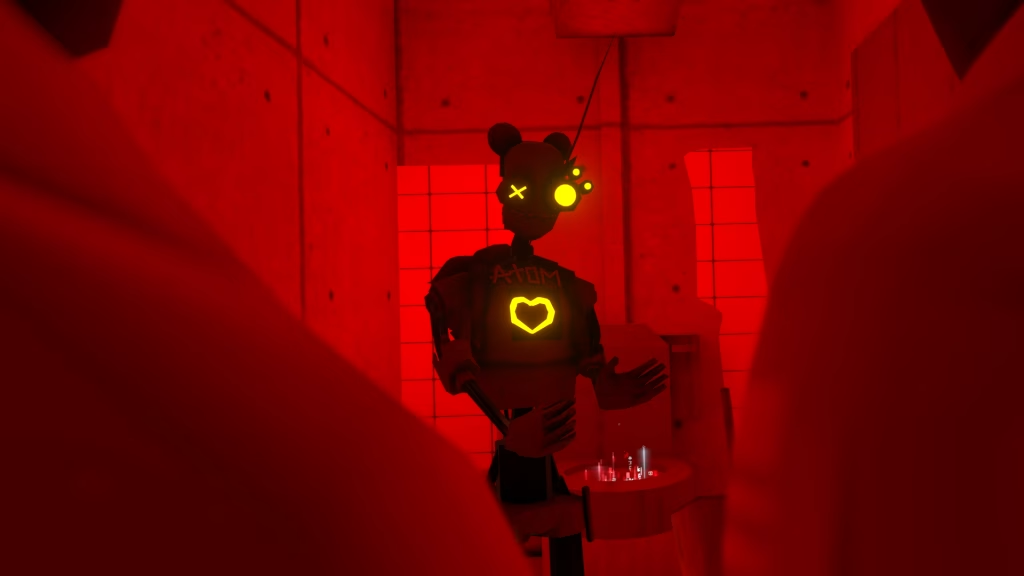
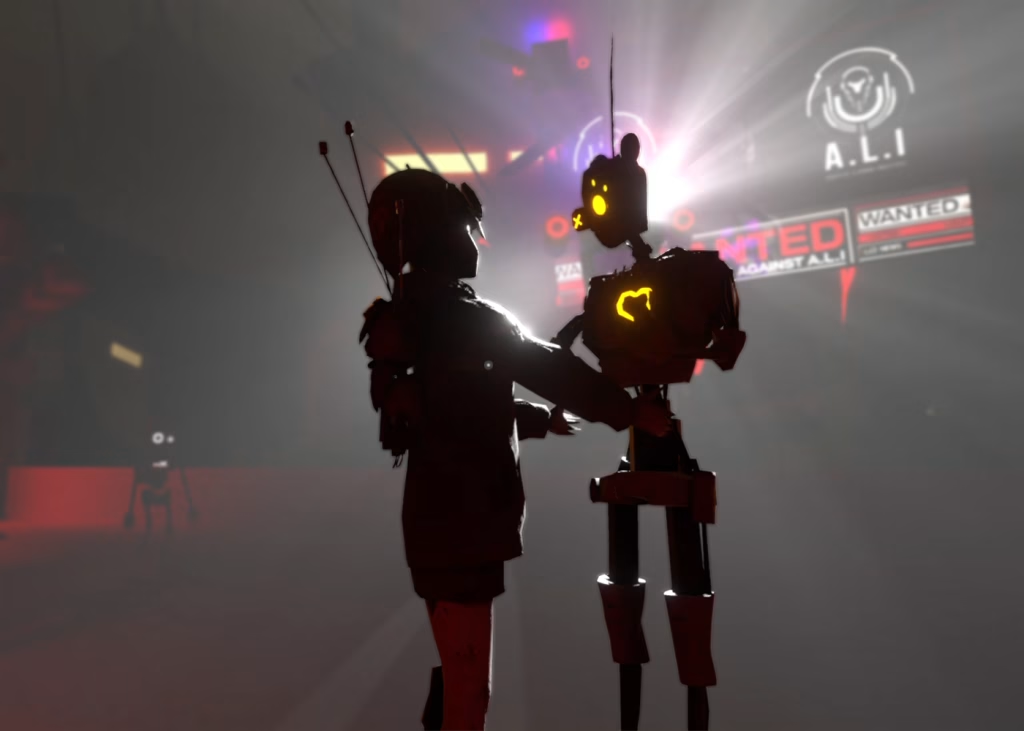
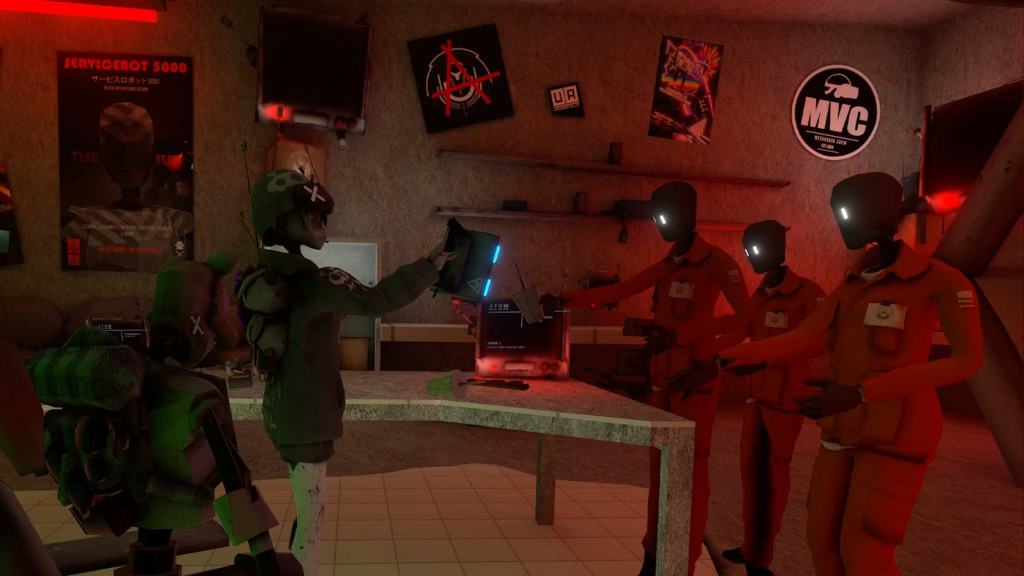
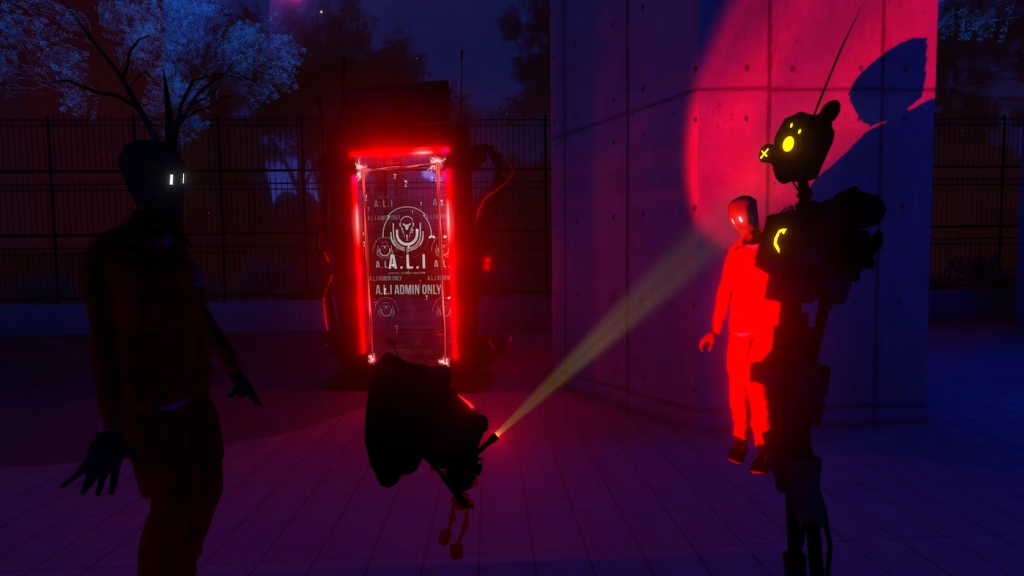
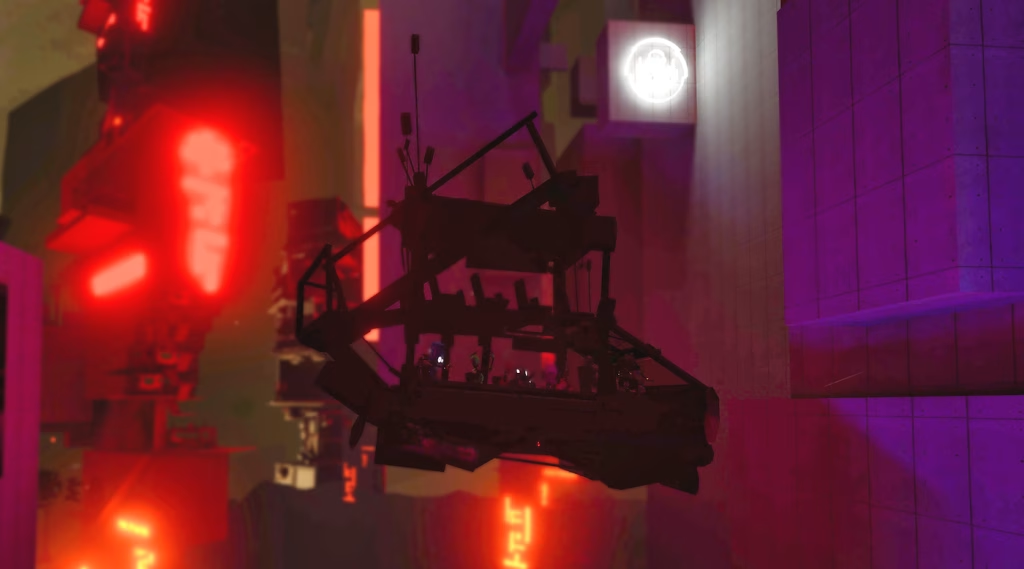
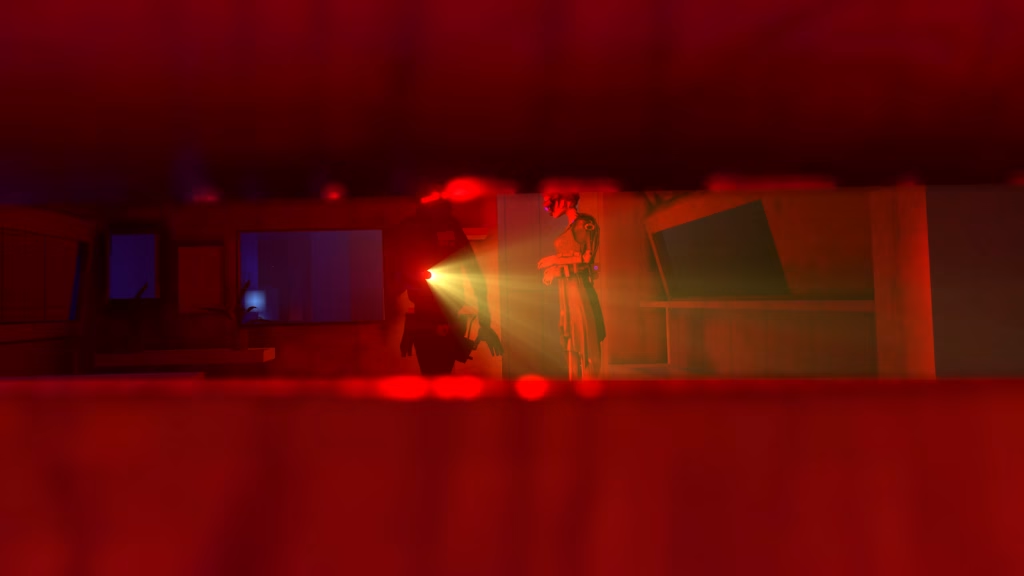
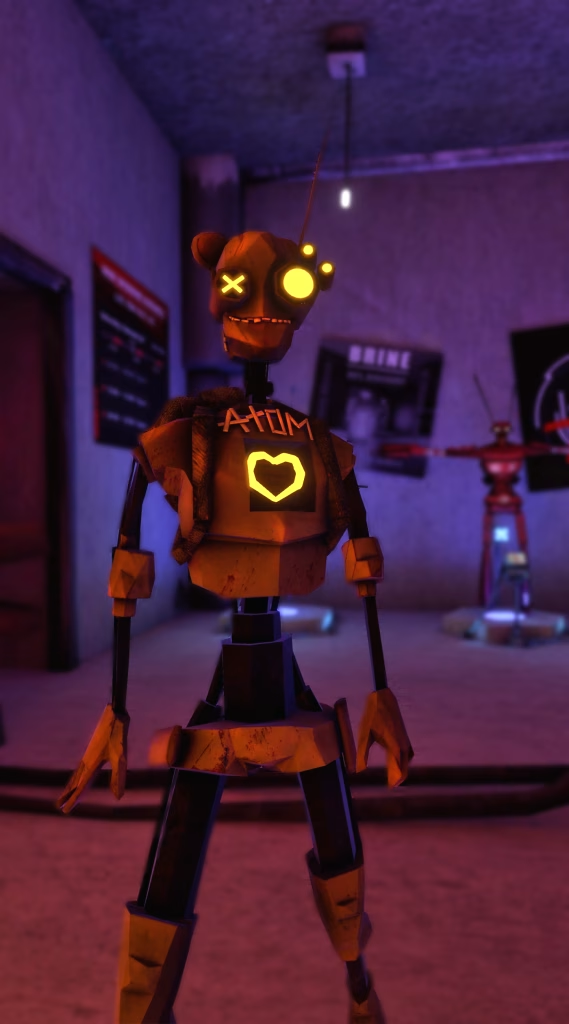
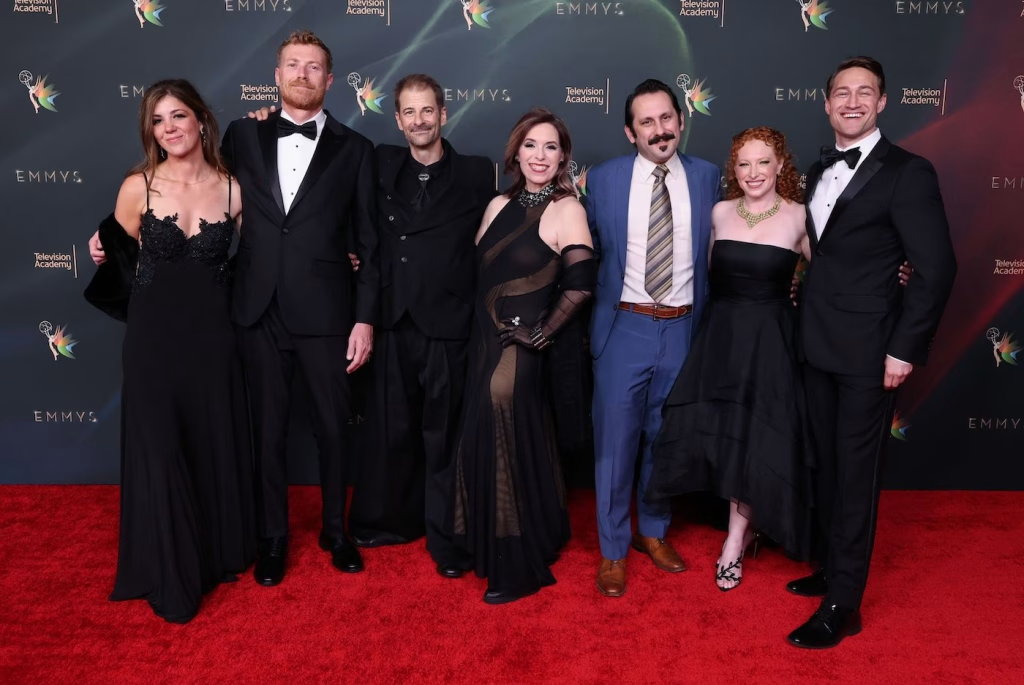
The production was created with Los Angeles-based Ferryman Collective, a VR theatre company. Treweek and his team built the virtual world while Ferryman brought its experience in live performance, writing and direction.
The result is something that sits somewhere between theatre, gaming and immersive art – although Treweek is interested in pushing those boundaries rather than defining the work too neatly.
A global creative practice, from Kommetjie
The technology can sound futuristic, but Treweek’s working life is surprisingly grounded in a familiar South African reality.
He lives and works in Kommetjie, while collaborating with people in the United States and connecting with creative and technology communities around the world.
For someone working in an emerging medium, that ability to enter global communities without physically travelling to them is significant.
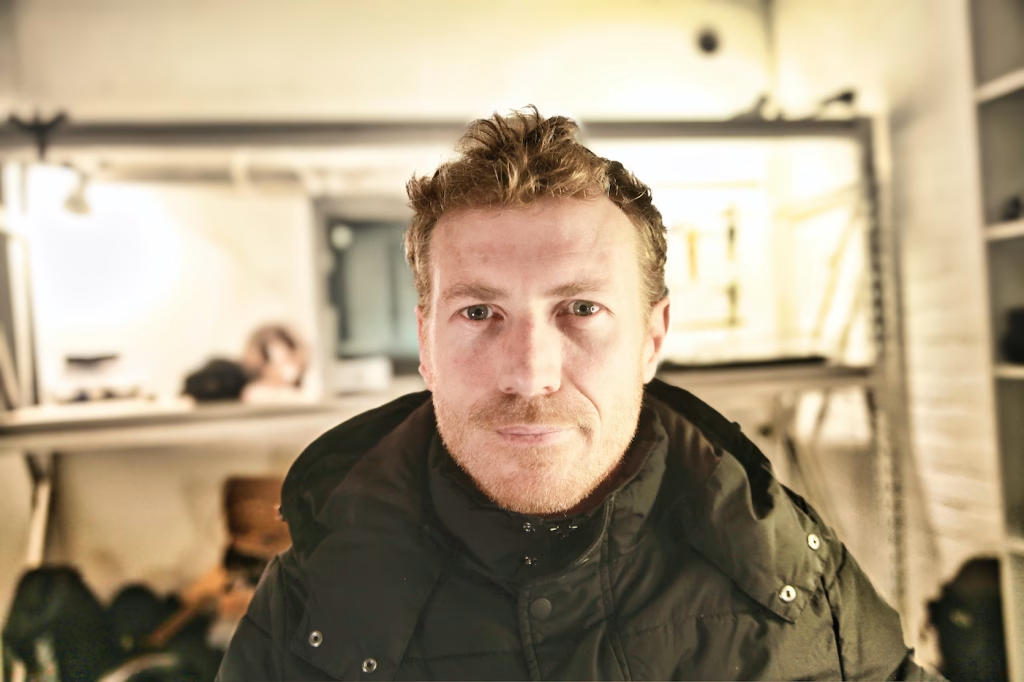
Treweek sees VR as a way of connecting people across geographical and cultural boundaries. During the pandemic, he experienced that first-hand through virtual events and collaborations, including working with people from countries and cultures very different from his own.
It has also changed what being geographically isolated can mean.
South Africa presents its own challenges for immersive creators – access to hardware, power interruptions and limited funding all add friction to a field that already has a relatively high barrier to entry.
But Treweek says the quality of work coming out of South Africa is remarkable, in part because local creators are accustomed to figuring things out themselves and taking on multiple roles to get a project made.
That resourcefulness is something he wants to help build on through his work with Electric South, where he has recently joined the board. Electric South’s labs support immersive and emerging media creators across the continent, and Treweek is keen to raise the profile of the field and encourage more investment in it.


The weird stuff pays off
The Emmy recognition for Uncanny Alley: A New Day comes after years of Treweek making work that doesn’t necessarily fit comfortably into an existing category.
He has previously described his biggest creative struggle as believing that his ideas were too weird and that nobody else would like them.
The irony, he says, is that his “weird moonlighting projects” have often been the things that brought him the most success.
Perhaps that’s part of what makes his work particularly interesting from a place like Kommetjie.
You don’t need to be a gamer to understand the impulse behind it. You don’t even need to be particularly interested in technology.
At its heart, Treweek is making places for people to go – places that can be inhabited, explored and remembered, even though they don’t physically exist.
And the next version of Uncanny Alley is already in development.
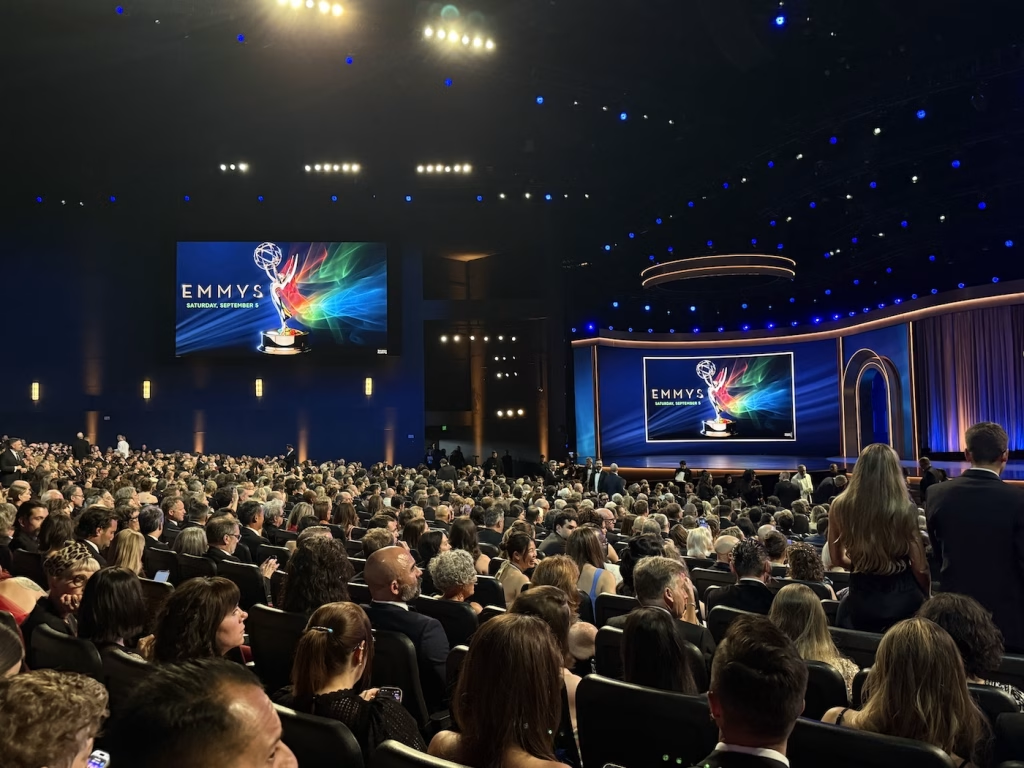
The award itself – Outstanding Emerging Media Program – is a relatively new Emmy category, created to recognize virtual, interactive and metaverse-driven storytelling. This year’s nominees included studio-backed productions from Blumhouse and the Fallout franchise, putting a project built from a home office in Kommetjie alongside some of the industry’s biggest names.
Watch the Emmy moment below.